States Challenge Paramount-Warner Bros. Merger Despite DOJ Approval
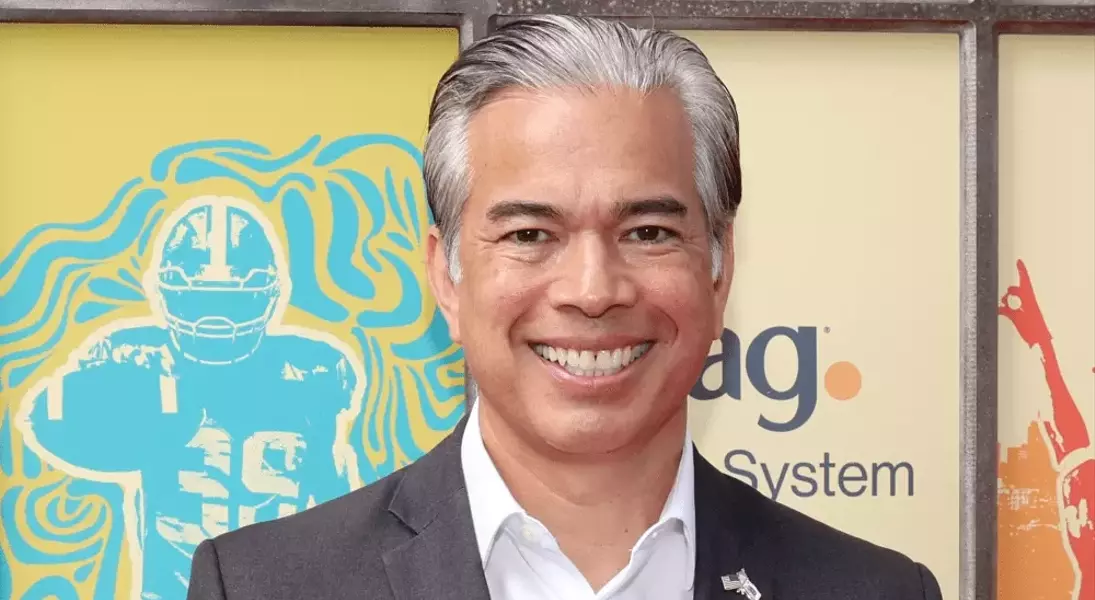
Despite the Department of Justice's recent endorsement, a coalition of twelve states, spearheaded by California's Attorney General Rob Bonta, has launched an antitrust challenge aimed at halting the planned integration of Paramount Skydance and Warner Bros. Discovery. This legal maneuver underscores a growing divergence between state and federal oversight regarding significant corporate consolidations, particularly within the media sector. The states contend that the proposed 1 billion deal, if allowed to proceed, would severely curb market competition across multiple entertainment industry segments, potentially detrimentally impacting consumers and various related businesses.
The core of the states' legal complaint, submitted on a Monday, asserts that the merger contravenes the Clayton Act. Specifically, they allege that the consolidation would lead to a substantial reduction in competitive dynamics within three key markets: the broader theatrical distribution arena, the specialized segment for high-grossing cinematic releases, and the licensing of basic cable content. Attorney General Bonta articulated the coalition's concerns, stating that such a union of two media titans would inevitably result in elevated consumer costs, a decline in content quality, and a narrower selection for film and television viewers. This impact, he stressed, would ripple through the industry, affecting movie theaters and basic cable distributors, and ultimately limiting the choices available to audiences nationwide.
The lawsuit meticulously details the potential market dominance of the merged entity, projecting its control to reach approximately 27% in wide-release theatrical distribution, a significant 30% within the submarket of anticipated blockbuster productions, and another 27% in the basic cable bundle. These figures are presented as evidence that the combined company would wield undue influence, thereby undermining the competitive environment that is crucial for the health of movie exhibition and cable/satellite programming providers. The states emphasize that an oligopoly in these sectors would stifle innovation and lead to less favorable terms for all parties reliant on diverse content offerings and distribution channels.
Moreover, the plaintiffs highlighted that Paramount and Warner Bros. are two of only five major legacy studios still in operation. Collectively, these five studios—which also include Disney, Sony, and Universal—account for a staggering 86% of all theatrical distribution and an even higher 90% of blockbuster distribution. Given that Warner Bros. and Paramount hold the second and third largest shares in basic cable distribution, respectively, their merger would further intensify this market concentration. Bonta passionately argued against the notion of market rigging, advocating for a system that champions fair competition and ensures a wide array of stories, ideas, and perspectives reach audiences, asserting that 'America has no kings in government or our economy.'
Conversely, Paramount has maintained that the merger would offer substantial benefits to consumers by fostering a more robust streaming platform capable of competing effectively with established giants like Netflix, Amazon, and Disney. David Ellison, Paramount's CEO, has publicly committed to producing at least 30 films annually post-merger, aiming to sustain and even amplify the current production levels of both companies. Jeffrey Kessler, legal counsel for Paramount, recently voiced skepticism about the states' challenge, suggesting that the deal would stimulate increased production and create more job opportunities for creative talent, especially in California.
The Department of Justice's decision in June to greenlight the merger, accompanied by an extensive rationale arguing against adverse competitive impacts across theatrical, streaming, and linear television markets, has been challenged by the states' action. This federal approval contrasts with the reservations expressed by Hollywood labor unions, who have voiced concerns over potential job losses stemming from further industry consolidation. The legal battle is poised to escalate, with the states expected to seek an injunction to prevent the transaction's completion, which Paramount had initially anticipated closing shortly after July 22. This comes after Oregon's attorney general, Dan Rayfield, temporarily sought a delay to the merger, citing Paramount's alleged uncooperativeness in providing requested documentation for his investigation, hinting at potential impropriety in the DOJ's earlier assessment, though this request was later withdrawn.
The coalition pursuing this lawsuit includes Arizona, California, Colorado, Connecticut, Massachusetts, Minnesota, Nevada, New Jersey, New Mexico, New York, Oregon, and Washington, all represented by Democratic attorneys general. Attorney General Bonta has consistently voiced alarm over the transaction, signaling that his office would not simply acquiesce to the DOJ's stance. This aggressive approach by state attorneys general to independently challenge large mergers has precedent, particularly in light of past federal leniency under previous administrations, such as the Department of Justice's handling of the Ticketmaster-Live Nation case. A notable example of successful state intervention was an injunction secured earlier this spring to block the Nexstar-Tegna merger, demonstrating the growing assertiveness of states in upholding antitrust principles.