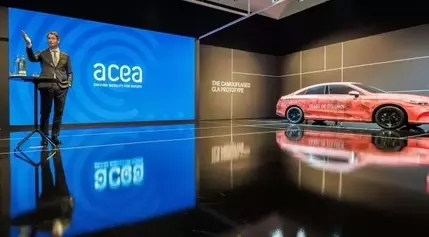
In an era marked by escalating trade tensions, the automotive industry stands at a critical juncture. The head of Mercedes-Benz has proposed a strategic approach to resolving disputes between the European Union (EU) and China over electric vehicle (EV) imports. Ola Källenius, CEO of Mercedes-Benz and president of the European Automobile Manufacturers' Association (Acea), suggests encouraging Chinese carmakers to establish more plants within the EU. This initiative aims to create a balanced playing field and potentially lead to the removal of punitive tariffs on Chinese EVs. The proposal reflects the complex interplay between economic interests and geopolitical dynamics, highlighting the need for mutually beneficial solutions.
Promoting Mutual Investment as a Path to Trade Harmony
In the midst of growing trade friction, the automotive sector is exploring avenues for cooperation. Mr. Källenius emphasized that decades ago, European car manufacturers were required to invest in China to access its market. Now, he advocates for a reciprocal arrangement where Chinese companies would be encouraged to set up operations within the EU. This approach could foster greater economic integration and mitigate the adverse effects of protectionist policies. In October, Brussels introduced tariffs of up to 45% on Chinese EV imports, citing unfair subsidies. Beijing retaliated with tariffs on brandy and investigations into pork and dairy products. German automakers, particularly vulnerable due to their significant presence in both China and Europe, have voiced concerns about potential retaliatory measures from Beijing. They fear these actions could further erode their market share, especially as they struggle to compete with affordable and technologically advanced Chinese EVs like those produced by BYD. When German manufacturers entered the Chinese market in the 1980s, they formed joint ventures with local partners. Källenius believes a similar strategy could be applied today, suggesting that policymakers should consider creating conditions that encourage mutual investment. He also noted that Brussels is considering criteria that would require Chinese businesses to establish factories in Europe and share technological knowledge. BYD plans to build vehicles in Hungary, while CATL has agreed to construct a €4.1 billion lithium battery factory in Spain. Källenius warns that tariffs could harm the industry and urges Brussels to negotiate a deal with Beijing to remove them. He emphasizes that China has become an essential part of the global automotive supply chain, including raw materials, advanced chips, and components.
From a journalistic perspective, this situation underscores the importance of fostering open dialogue and cooperation in international trade. The automotive industry's interconnectedness highlights the need for policymakers to carefully weigh the long-term consequences of protectionist measures. Encouraging mutual investment could pave the way for a more balanced and prosperous global economy, benefiting all stakeholders involved.
New